
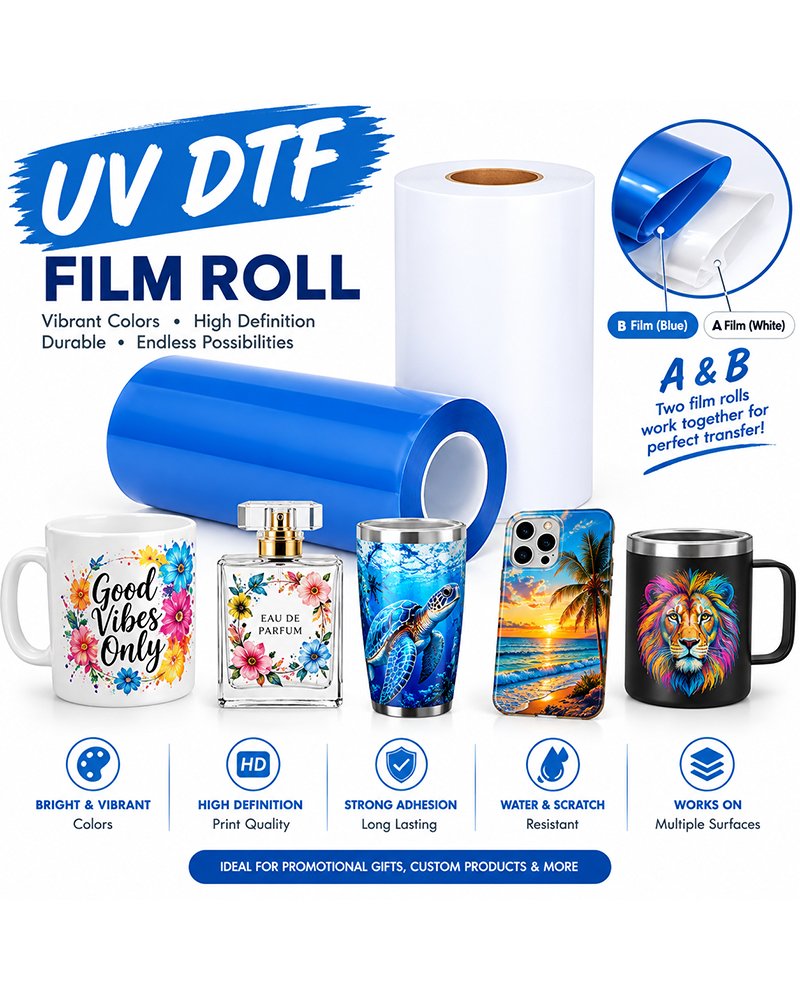
DTF (direct-to-film) and UV DTF printing share a name and a basic idea: you print a design onto a film and then transfer it to a product. But they use different inks, different films and different finishing steps, and they are built for different products. If you are deciding where to invest, or you already run one process and are thinking about adding the other, this guide explains the key differences.
What Is DTF Printing?
DTF printing is a transfer process for fabrics. A DTF printer prints the design in reverse onto a PET transfer film using CMYK inks, then lays a white ink layer on top. While the ink is still wet, hot-melt adhesive powder is applied, the excess is shaken off, and the film is cured so the powder melts into an adhesive layer. The finished transfer is then heat pressed onto the garment and the film is peeled away.
Because the white underbase and adhesive do the work, DTF prints well on cotton, polyester, blends and other fabrics, in both light and dark colors, with no pre-treatment of the garment.
What you need for DTF
- A DTF printer, such as our DTF printers with Epson i3200 printheads
- DTF ink in Cyan, Magenta, Yellow, Black and White
- DTF transfer film
- DTF adhesive powder
- A powder shaker and dryer (or a manual powdering and curing setup)
- A heat press
- RIP software to manage color and the white layer
What Is UV DTF Printing?
UV DTF printing makes transfers for hard surfaces rather than fabric. A UV printer prints the design onto an A film that carries an adhesive layer, using UV-curable inks. A UV lamp cures the ink instantly as it prints. The printed A film is then laminated with a B film, creating a ready-to-use transfer that works like a high-quality sticker.
To apply it, you peel off the backing, press the transfer firmly onto a clean, dry surface, and peel away the top film. No heat press is needed. Many UV DTF setups also print a clear varnish layer, which can add gloss and a raised, textured feel.
What you need for UV DTF
- A UV DTF printer with a UV curing system and lamination
- UV DTF ink in Cyan, Magenta, Yellow, Black, White and Varnish
- UV DTF A&B film
- RIP software that handles the white and varnish layers
DTF vs UV DTF at a Glance
| DTF | UV DTF | |
|---|---|---|
| Main use | Fabric and apparel transfers | Transfers for hard surfaces |
| Typical items | T-shirts, hoodies, sportswear, tote bags, caps | Tumblers, glass, acrylic, phone cases, packaging, promotional items |
| Ink | Water-based pigment DTF ink (CMYK + White) | UV-curable ink (CMYK + White + Varnish) |
| Film | Single PET transfer film | Two-part A & B film system |
| Adhesive | Hot-melt adhesive powder | Adhesive layer on the A film, laminated with B film |
| Curing | Heat (oven or dryer) melts the powder | UV light cures the ink as it prints |
| Application | Heat press | Press on by hand and peel; no heat press |
| Feel / finish | Soft, flexible print that stretches with fabric | Raised, glossy or textured finish possible with varnish |
Key Differences Explained
1. The surface you are decorating
This is the deciding factor. DTF is for textiles: shirts, hoodies, uniforms, bags, hats and other fabric items. UV DTF is for rigid, smooth surfaces: glass, acrylic, coated metal, many plastics, ceramics, drinkware and packaging. UV DTF transfers are not designed for garments, and DTF transfers are not designed for hard goods.
2. Ink chemistry
DTF ink is a water-based pigment ink that needs heat and adhesive powder to bond to fabric. UV DTF ink is UV-curable: it stays liquid until UV light hardens it. The two are not interchangeable. Never put DTF ink in a UV printer or UV ink in a DTF printer, and avoid mixing ink brands or formulations in the same system.
3. Film and adhesive
DTF uses a single PET film plus a separate adhesive powder. UV DTF uses a two-part A&B film system, where the adhesive is part of the film itself, so there is no powder step.
4. Curing and finishing
DTF transfers are cured with heat to melt the powder, then applied with a heat press. UV DTF ink is cured by UV light during printing, and the transfer is applied by hand pressure. That makes UV DTF convenient for items that cannot go into a heat press, like bottles and curved tumblers.
5. Look and feel
DTF prints are thin and flexible so they move with the fabric. UV DTF prints are designed to sit on a hard surface and can have a glossy or raised finish, especially when varnish is used.
Which One Is Right for Your Business?
- Choose DTF if most of your orders are custom apparel: T-shirts, team uniforms, workwear, hoodies and tote bags.
- Choose UV DTF if you sell personalized gifts and promotional products: tumblers, glass bottles, phone cases, signage and packaging labels.
- Consider both if you want to offer apparel and hard goods to the same customers. Many print shops start with one process and add the other as demand grows.
Common Mistakes to Avoid
- Using the wrong ink for the printer or process
- Mixing ink brands or batches in the same ink system
- Skipping regular nozzle checks and maintenance
- Not testing a new substrate before a large production run
- Ignoring the film and powder manufacturer’s recommended settings
Shop DTF and UV DTF Supplies at DPI Shop
DPI Shop supplies both processes: High Performance DTF Ink, DTF Instant Hot Peel Film, DTF Powder, UV DTF Ink and UV DTF Film A&B, plus DTF printers, powder shakers and heat presses. Not sure which setup fits your shop? Contact our team.

